
Six Sigma is not just a belt structure or a math toolkit. It is a disciplined way to define problems, measure variation, analyze causality, improve performance, and hold the gains. This hub gathers the site’s core Six Sigma content so users can move from method understanding into real analysis tools.

New · Interactive
DMAIC Toolbox
One page with a tab for each DMAIC phase. Each tab gives an overview, step-by-step guidance, the core tools, a tollgate checklist, common mistakes, and links to the calculators and templates on this site. All five phase tabs are available now.
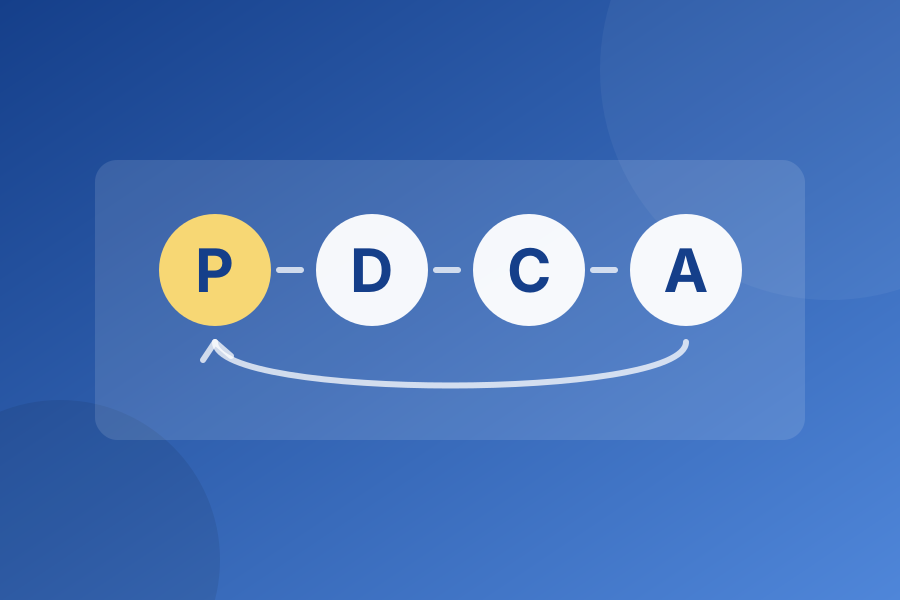
New · Interactive
PDCA Toolbox
One page with a tab for each step of the plan-do-check-act cycle. Each tab gives an overview, step-by-step guidance, the core tools, a checklist, common mistakes, and links to the calculators and templates on this site. All four step tabs are available now.

New · Interactive
DOE Toolbox
One page with a tab for each stage of a designed experiment: frame the question, design the experiment, run it, analyze the results, and optimize and confirm. Each tab gives an overview, step-by-step guidance, the core tools, a checklist, common mistakes, and links to the calculators and templates on this site. All five stage tabs are available now.
Best Guides
Lean Six Sigma Green Belt Pocket Guide
Use a practical Green Belt reference for DMAIC, waste detection, statistical basics, and project execution discipline.
Lean Six Sigma Black Belt Pocket Guide
Go beyond Green Belt depth with project selection, designed experiments, SPC, change leadership, and a full worked case study.
Minitab Guide for Lean Six Sigma
A task-by-task guide to Minitab for DMAIC projects: data setup, Gage R&R, tests, experiments, and control charts.
Stat Dojo
Statistics for Lean Six Sigma: choose the right test, then work it by hand, in Excel, and in Minitab. Starts with one-way ANOVA.
Lean Six Sigma DMAIC Roadmap
Understand the full Define-Measure-Analyze-Improve-Control logic used in manufacturing projects.
PDCA Cycle Guide
Use PDCA as the smaller-loop experimental pattern that supports disciplined improvement.
Quality Philosophy Foundations
Anchor Six Sigma in Deming, Juran, Crosby, systems thinking, and prevention economics.
Project SENTINEL Case Study
See a real DMAIC-style narrative from baseline problem to validated fix and replication plan.
Related Calculators
Standard Deviation Calculator
Start with the variability basics that support capability and inference work.
Process Capability Helper
Evaluate Cp, Cpk, Pp, and Ppk along with defect expectations against specification limits.
Sigma Level and DPMO Suite
Translate yield, defects, opportunities, and DPMO into sigma language and benchmark context.
Hypothesis Testing Quick Tester
Check whether observed differences are real enough to support change claims.
Sample Size and Confidence Calculator
Plan studies so data volume is strong enough to support the conclusion.
DOE Quick Planner
Structure experiments deliberately rather than changing multiple variables by guesswork.
Related Templates
Six Sigma Quality Calculator Suite
Use the workbook version of the core sigma and capability calculations when teams need a spreadsheet tool.
PDCA Learning Workbook
Support pilot discipline, evidence review, and standardization decisions with a structured workbook.
Suggested Learning Path
- Start with Quality Philosophy Foundations so the method sits on the right management logic.
- Work through the DMAIC guide to understand the overall project structure.
- Use the PDCA guide to strengthen smaller-loop experimentation inside bigger projects.
- Learn the measurement side with standard deviation, capability, sigma level, and yield calculators.
- Move into hypothesis testing, sample-size planning, and DOE when cause-and-effect claims need stronger evidence.
- Finish with Project SENTINEL to see the discipline applied end to end.